Mystras – Medieval Monasteries in Laconia

Pantanassa Monastery, founded in the 15th century
On the Eastern slopes of the Taygetos mountains (pic 1), not far from modern day Sparti, are the ruins of Mystras, the provincial capital of the Byzantine empire in the 14th and 15th century.
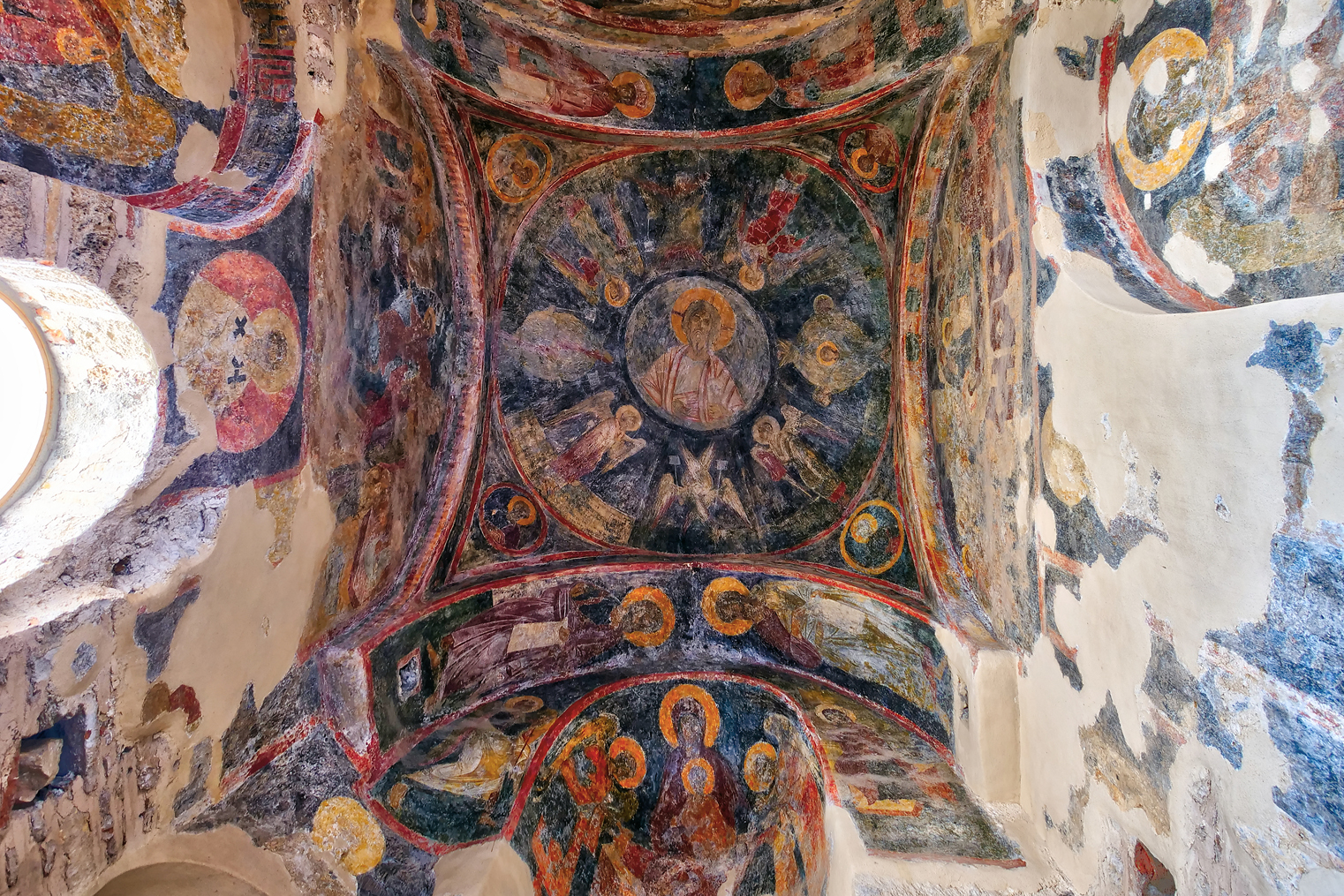
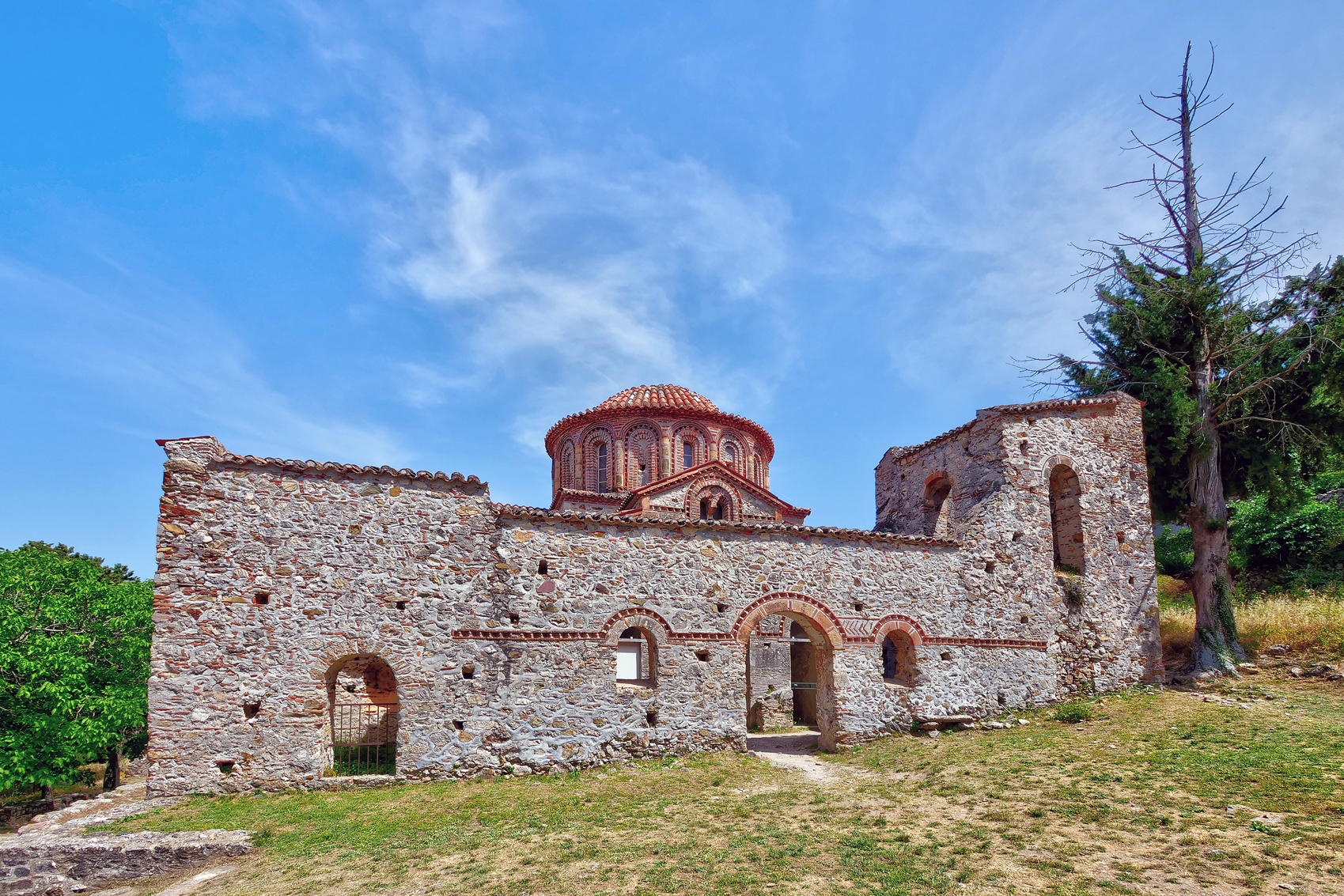
Around 1250 CE the Frankish ruler William II of Villehardouin built a fortress on a hill overlooking the Laconian plains (pics 2 and 4). But soon the Byzantines recaptured the area and decided to built the despot’s (local ruler) palace and a fortified city below the fortress (pic 3). Because many wars were fought in the area between the Franks and the Byzantines, various monks living in the area sought the protection of a strong municipality and set up four large monasteries within the city walls – thus improving the fortification of the city (pics 5,8,11,14). Mystras was a big centre of Byzantine learning and culture. The famous Neoplatonist philosopher Gemistos Plethon lived there until he died in 1452 CE.
The city was conquered by Ottoman emperor Sultan Mehmed II in 1460. Mystras was abandoned in 1823 after various hostile attacks, but one monastery (Pantanassa, pics 11&12) is still in use today and some of the buildings and murals of the other three are fairly well preserved. They are an excellent testimony of the colorful artwork of the medieval Greek monks and artisans (pics 6,7,9,10,13,15). In 1989 the site was listed as a UNESCO World Heritage.
Mystras is a typical late Byzantine fortified city arranged in three belts. Initially the castle was built on top of the hill and this was followed by gradually increasing numbers of population settling on the slopes, resulting in the creation of a greater fortified residential area, protected by two curtain walls. The inner curtain wall formed the boundary to the Upper City; that is the part of the city which extended from the citadel to the palaces, housed the administrative centre and was an aristocratic residential area. The second, larger, residential belt, known as the Lower City, spread out below the upper area and was bounded by the city’s external walls. The Cathedral, many noteworthy monasteries, the homes of well-known officials, as well as many other homes, were all in this area. The peasant population lived outside the walls in the “City Outside the Walls” and in times of danger they sought refuge inside the fortified city. (on-site sign)