
the red sea
In March 2024, I traveled to the Egyptian Red Sea coast for a writing retreat near El Quseir. Besides a few ancient harbors like MyosHormos (El Quseir) or Berenike, most settlements on this desert coast are of fairly recent origin. Numerous tourist resorts now offer coral reefs, pleasantly warm water year-round, calm beaches, and stunning night skies—an ideal setting for research and writing.


However, as I found out later, some port towns have existed for a long time. Important trade routes connected the Red Sea ports to Ethiopia, Arabia, and even India. They were the outposts of the Egyptian empire in Ptolemaic times and its gate to the East.
The recent excavation of a 70 cm high Buddha sculpture in Berenike provides tangible evidence of not just trade, but a deep cultural exchange between Egypt and India. This may also explain why the massive structures of Indian temples in Mathura, Tiruvannamalai, or Madurai share striking similarities with the much older architectural logic of the main Egyptian temples.
Below is a map of ancient trading posts where documents, goods, and coins from distant lands have been discovered:
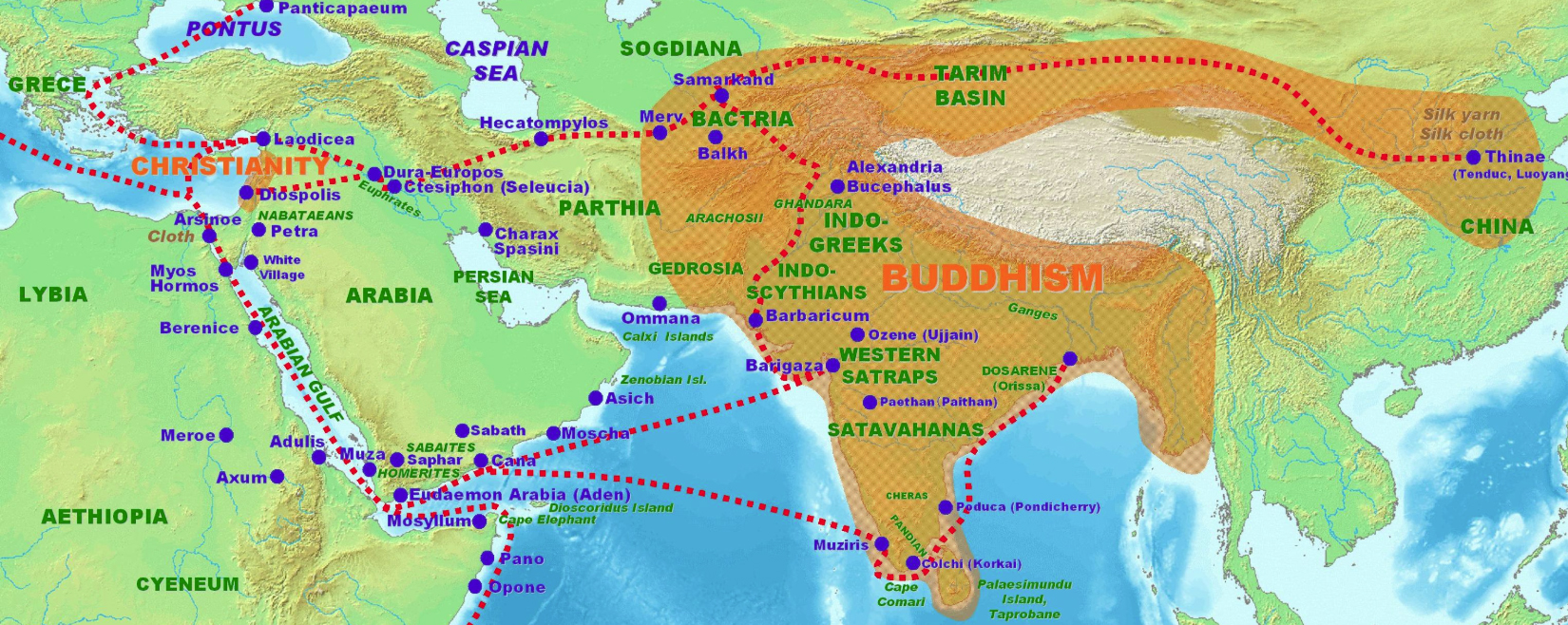
Early Egyptian connection through the Red Sea (Arabian Gulf) to India and the Buddhist world (commons.wikimedia.org/wiki/File:ExtentOfBuddhismAndTrade.jpg)
Further digital documentation:
The Madain Project – History and Archaeology of Ancient Egypt
Ancient Egypt – A collection of essays and pictures by American egyptologist Thomas F. Mudloff, Ph.D.