the medinet habu temple
One of the most impressive temples in Egypt, Medinet Habu is both a temple complex and a complex of temples, for the great estate encompasses the funerary temple of Ramesses III and the ruins of several smaller structures from earlier and later periods. The main temple itself is the best preserved of all the mortuary temples of Thebes (the ancient name of Luxor).
Ramesses III was the last great Pharaoh of the New Kingdom. His reign was influenced by the pressure of mass migrations and warfare. Unlike the peaceful periods of his predecessors, his time required a “Strongman” attitude to preserve the Egyptian state. His mortuary temple at Medinet Habu is not just a place of worship, but a massive stone record of fierce battling.

A drawn reconstruction of the temple complex at Medinet Habu in ancient days. (from Wilkinson. The Complete Temples of Ancient Egypt)
first pylon and courtyard
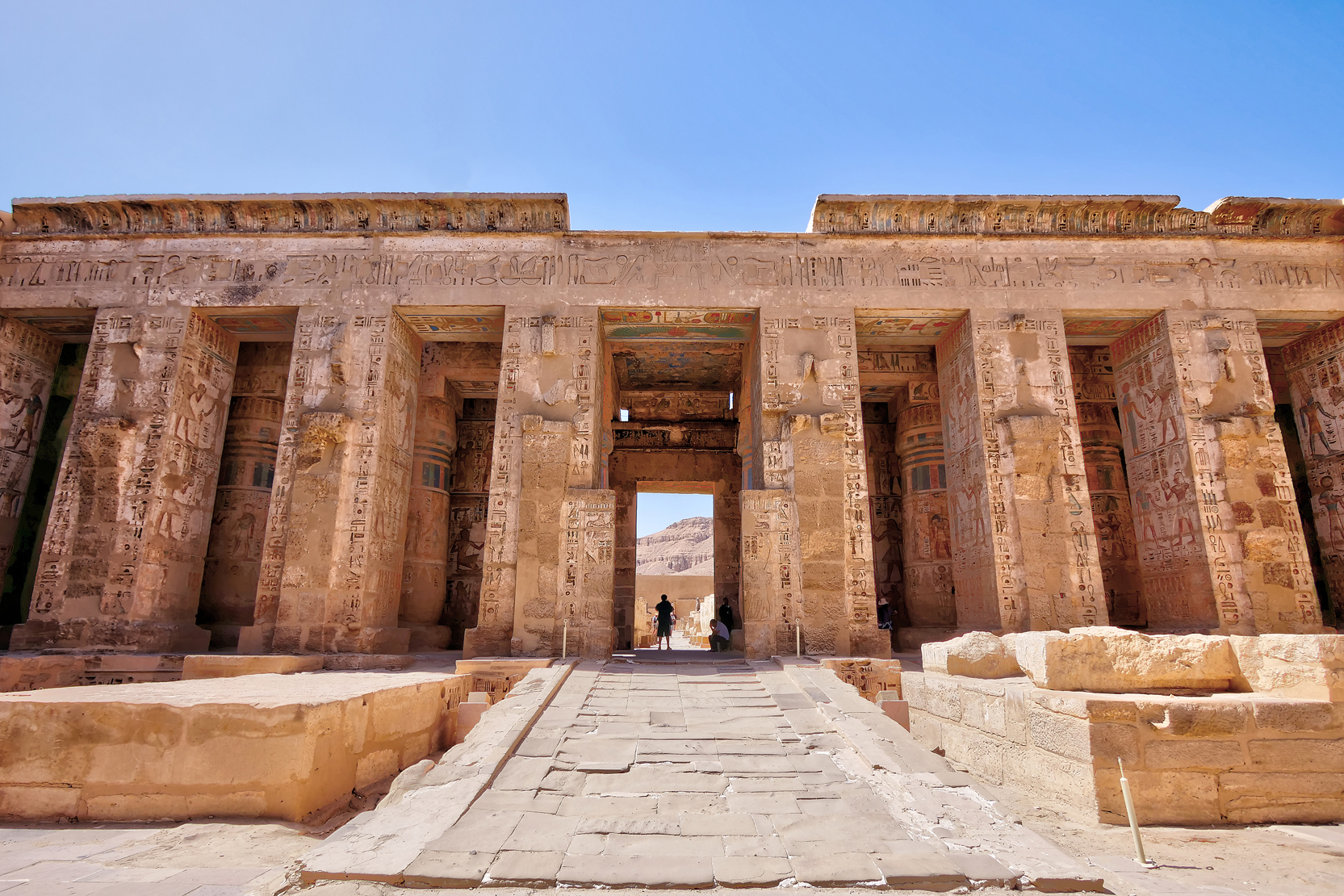
Photo 1 shows the Migdol (a Syrian fortified tower) from the inside. It’s the entrance to the entire temple precinct. Its unusual architecture—with those narrow, high windows—reminds us that Medinet Habu wasn’t just a place of worship, but a literal stronghold designed to protect the Egyptians from hostile invaders.
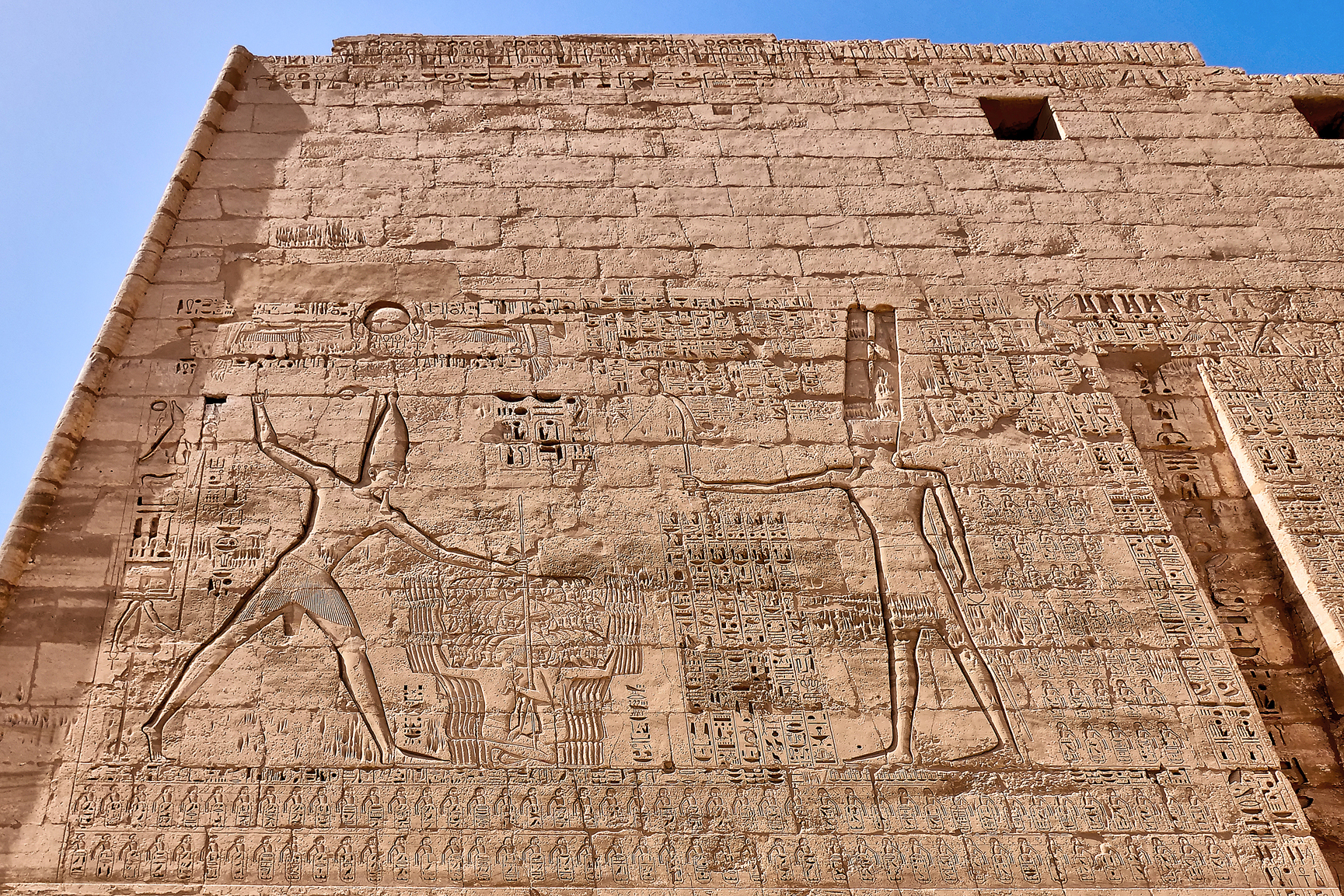
Photo 2: The temple’s outer walls depict historically important battle and victory scenes, showing Pharaoh Ramesses III and his army triumphing against the Libyans and the mysterious Sea Peoples who attacked Egypt during the king’s reign. While the Sea Peoples managed to destroy various flourishing cultures in Greece, Anatolia, and Syria (e.g. Hittites, Myceneans) the Egyptians fought them off successfully.
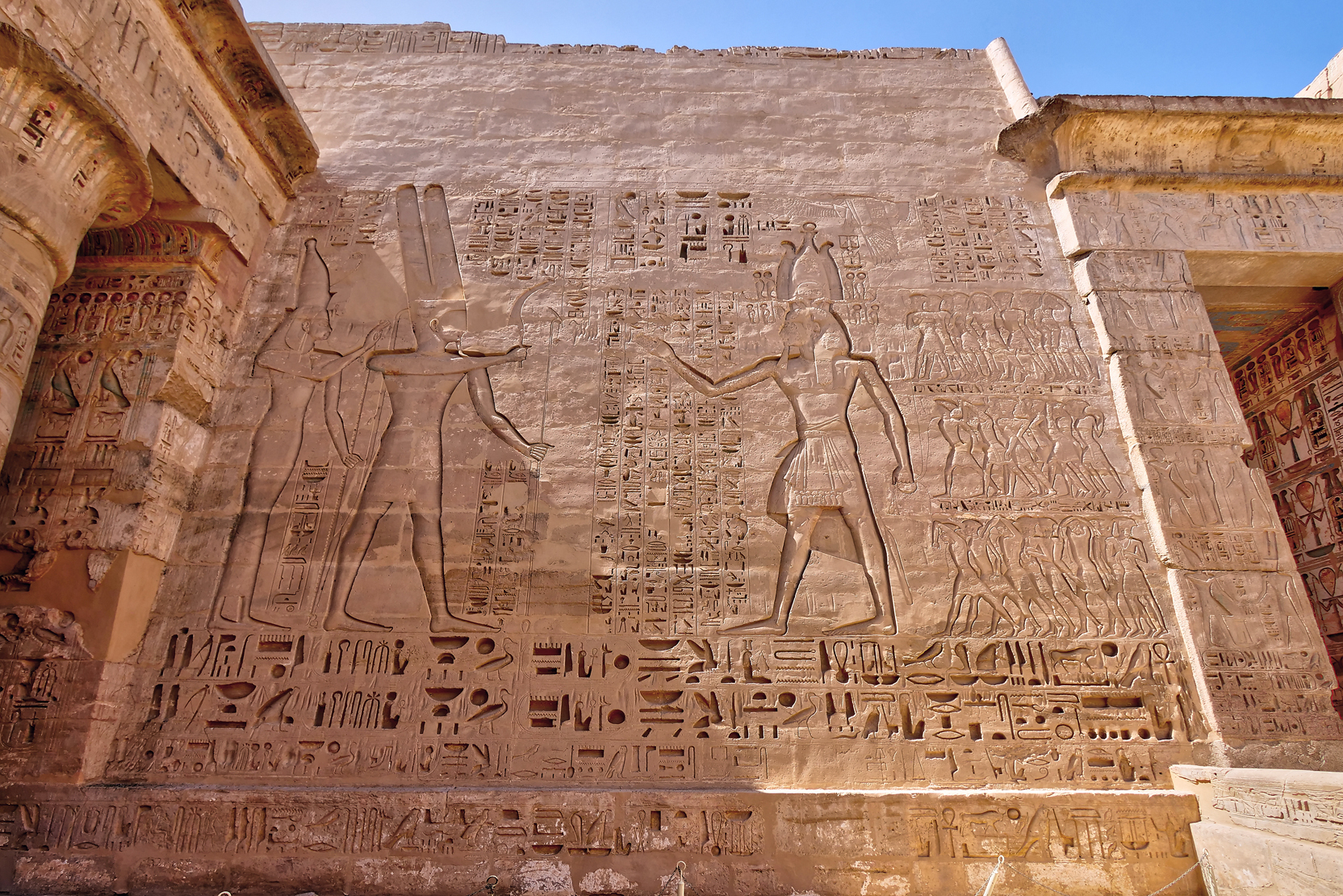
Photos 3: This large-scale relief from the temple’s courtyard shows the Pharaoh leading several rows of bound foreign captives into the presence of the seated Amun-Ra. Behind the Pharaoh are rows of soldiers or officials. This scene is a classic piece of “military might” propaganda, illustrating the Pharaoh successfully maintaining Maat (Cosmic Order ) by delivering the “Sea Peoples” or other defeated enemies to the state god of Egypt.
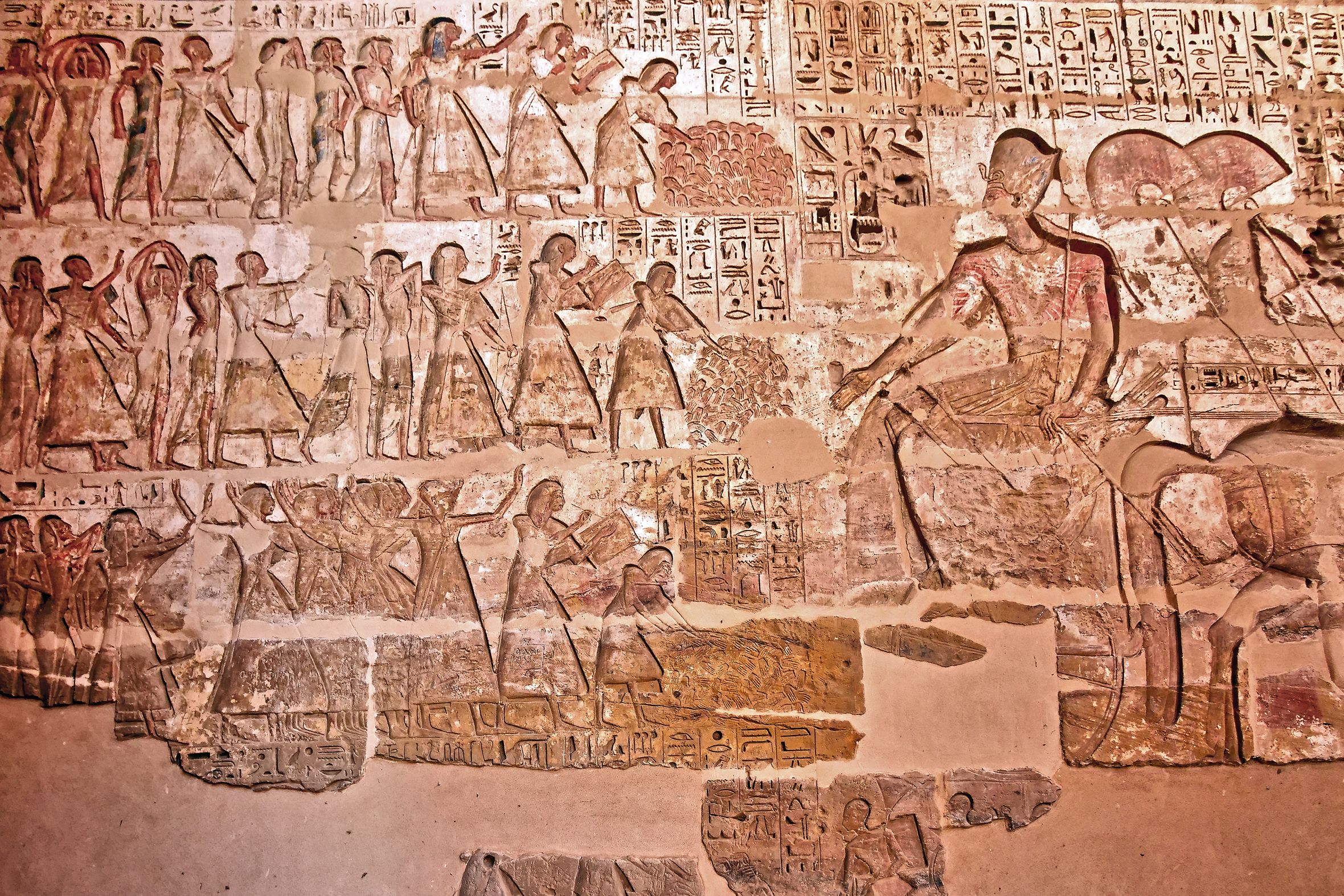
Photo 4: The war theme is continued within the temple’s first courtyard with scenes of soldiers counting hands and phalli of the enemy dead in front of Ramesses III, showing the grisly realities of war.
Photo 5: This court was flanked on the northern side by large engaged statues of the divine king as Osiris and, on the south, a columned portico with the ‘window of appearances’ in which the king stood or sat during formal ceremonies and festivities. The large Osiride statues of the second court were ruthlessly destroyed in the early Christian era by the Copts, who converted the area into a Christian church, though many of the original relief scenes that were painted over at this time have in fact survived in fairly good condition.


the second yard and the peristyle hall
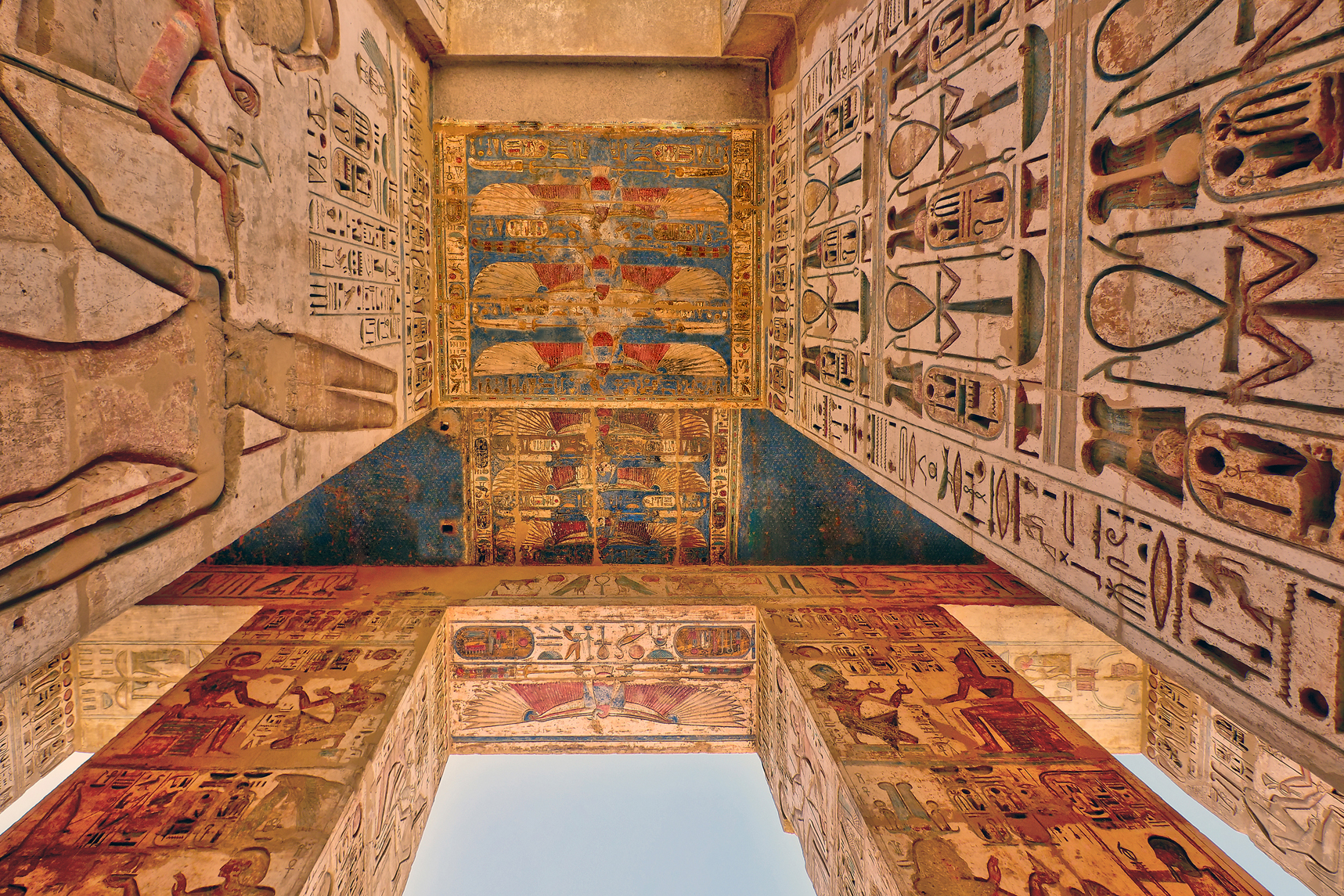
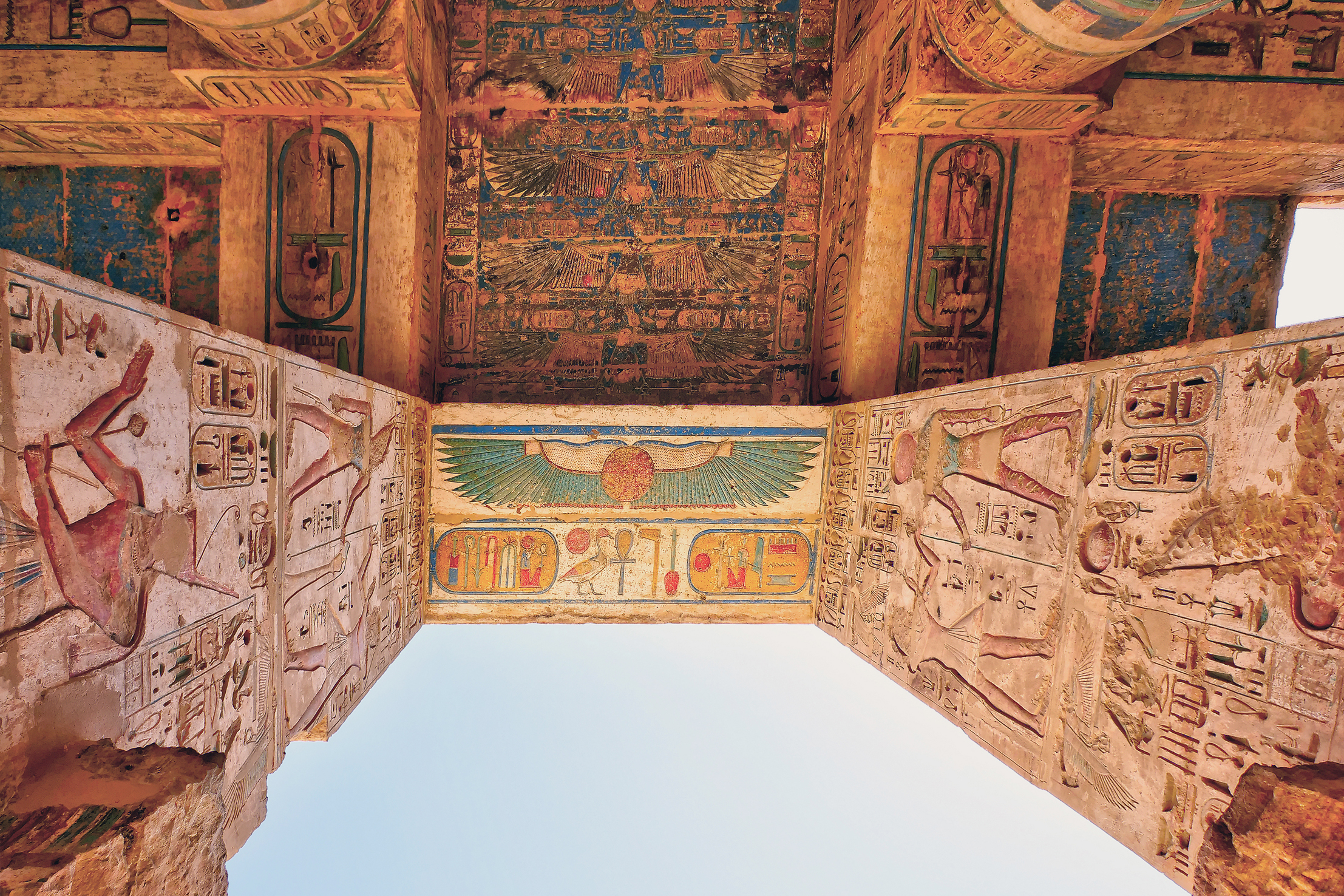
Photos 1 and 2 shows the remarkably vibrant ceiling decorations and lintels of the gateway between the first and second courtyards. It prominently features repeating images of the Vulture Goddess Nekhbet. The six pairs of spread wings represent the protective “Lady of the South,” ensuring the Pharaoh’s safety as he crosses the threshold. The massive lintels are densely inscribed with the royal titulary, emphasizing that the King’s authority is etched permanently into the structure of reality.
Photo 3 shows details of the square and round pillars in the second courtyard. The pillar carvings repeat the theme of divine companionship, showing that every action of the King was supported and legitimized by the gods. Details of the square and round pillars in the Second Court show Ramesses III in adoration before Amun-Ra. The King is never acting alone; every move is sanctioned and powered by the divine engine of the universe.
Photo 4 presents the view along the central axis of the Medinet Habu complex, looking from the Second Court (Festival Court) through the portico towards the First Hypostyle Hall.
Photo 5: The Threshold of Heaven (Transition from court B to C). This gateway leading into the Peristyle Hall features the Winged Solar Disk (Horus of Behdet). The ceiling is painted a deep sky-blue, representing the vault of heaven. This marks the final transition from the earthly courtyard into the “sacred darkness” of the inner temple interior.
Photo 6: This colorful mural depicts the Pharaoh making a small offering to Amun-Ra. Above the figures, two large protective vultures—representing the goddesses Nekhbet or Mut—extend their wings over the scene. They clutch Shen rings (symbols of eternity ) in their talons, signifying that the king’s authority and the protection of the gods are eternal.
Photo 7 shows Ramesses III wearing the Blue Crown (Khepresh) while performing a sacred libation ritual. He is pouring a stream of liquid (likely wine or water) from a vessel into a tall altar or vase. This act represents the king’s role in providing offerings to sustain the gods, ensuring their continued favor and the fertility of the land.
Photo 8 shows a deeply carved relief. Ramesses III stands before a seated Amun-Ra. The god is presenting the Pharaoh with a khopesh (a curved sickle sword), symbolizing divine authorization for military conquest. Standing behind Amun-Ra is a falcon-headed deity, likely Ra-Horakhty (“The Powerhouse” ), who observes the empowerment of the king.