Planet of Love
  • welcome
  • inspiration
  • exploring inside
  • exploring outside
    • much ado about nothing
    • the human quest
    • reality
    • two sisters
    • animals and plants
    • mountains
    • the alps
    • places of worship
    • mahendra’s greece
    • mahendra’s egypt
    • mahendra’s morocco
  • chanting
  • events
  • connections
  • about
  • emptiness
  • Click to open the search input field Click to open the search input field Search
  • Menu Menu

centres of moroccan muslim art: fes & meknes

part of the series “mahendra’s morocco“

© mahendra myshkin 2025

These two imperial cities embody the height of Moroccan Islamic art and architecture, from scholarly traditions to grand royal visions.
Of course the artesans had to follow the global islamic rules which forced them to forgo concrete figurative representation. Islamic art developed a highly complex geometric language by repeating, interlacing and radiating basic shapes. Just like their colleagues in India, Persia, Turkey, or Spain they developed incredibly elaborate designs, a form of sacred geometry that still influences artists around the world.

In the case of Morocco the Islamic design was additionally influenced by the rich artwork of the Berber tradition.

Fes

Founded in the 9th century, the city soon became a major center of learning and craftsmanship under successive dynasties. The city’s madrasas, mosques, and palaces showcase intricate tilework (zellij), carved plaster, and finely worked wood. Its medina, Fes el-Bali, is one of the largest car-free urban areas in the world and a UNESCO World Heritage Site.

Bab Boujloud, Fes
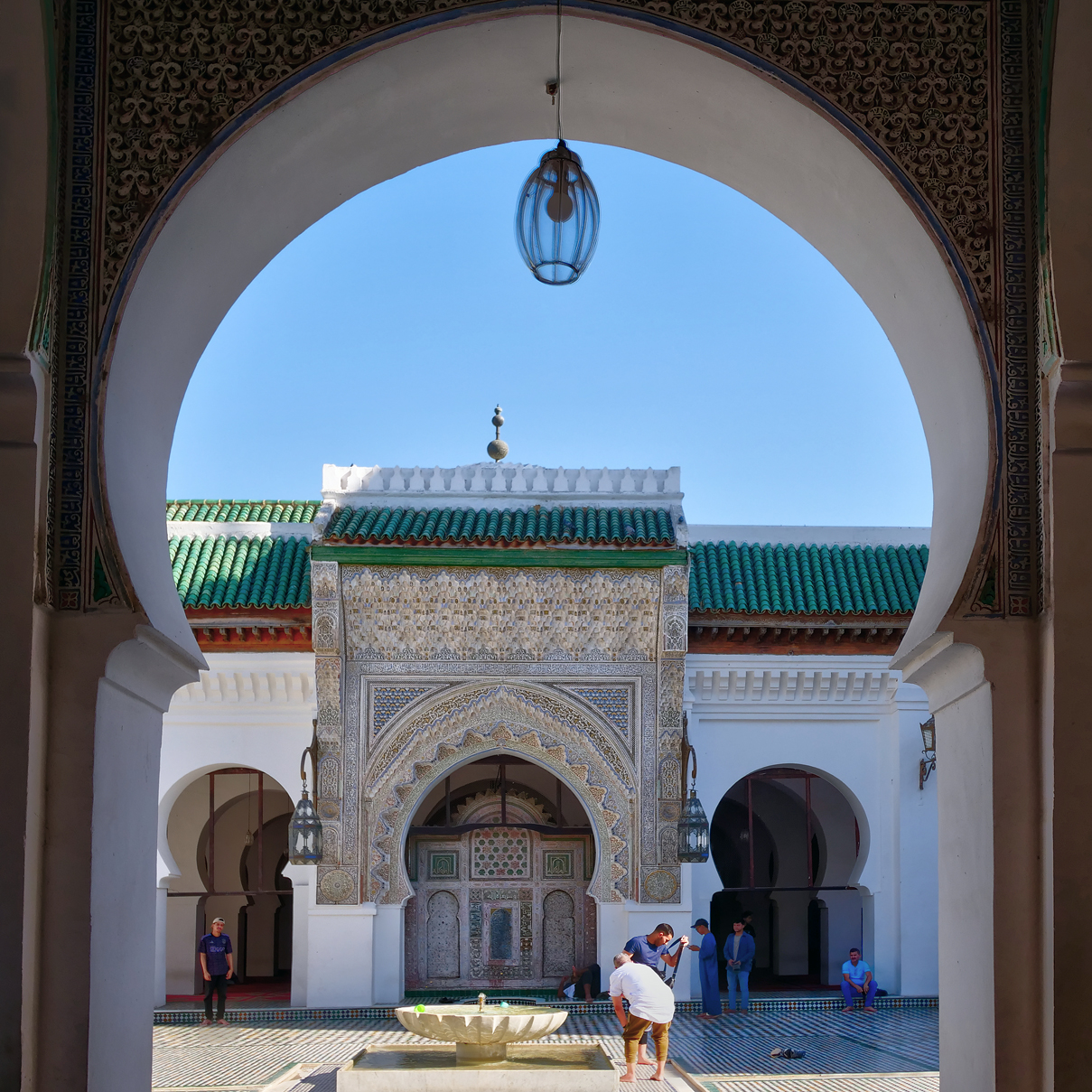
Courtyard, Madrasa Bou Inania, Fes
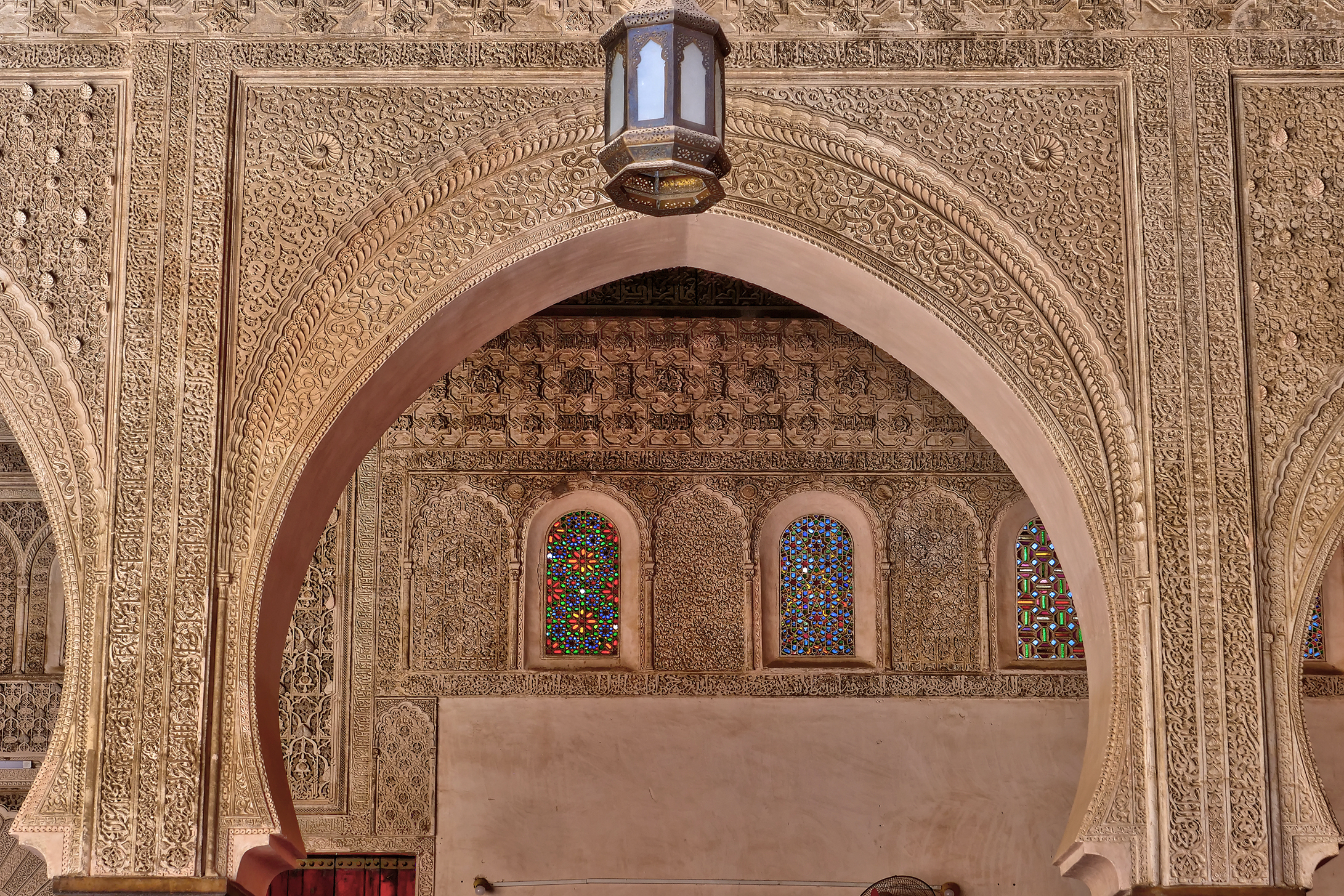
Fes, Madrasa Bou Inania: Interior Design
Fes: Zellij tilework featuring geometric motifs, Bou Inania
The Great Mosque of Fes el-Jdid
Courtyard of the Funduq al Najjarin, Fes
Gate of the Funduq al Najjarin, Fes
House-entrance, Medina of Fes
Storks breeding on the city wall of Fes
Meknes

Not far from Fes another royal city developed in the 17th century under Sultan Moulay Ismail, which is primarily known for monumental gates, expansive granaries, and stables designed to house thousands of horses.

Moulay Ismail Ibn Sharif (1645 – 1727) was the second ruler of the Alawi dynasty. He managed the longest reign of  any Sultan of Morocco from 1672 to 1727. Known as the “Warrior King” he expanded the Alawi empire ruthlessly fighting the Europeans and the Otomans. In addition to his military successes, he also managed to establish a harem of over 500 women with more than 800 confirmed biological children, making him one of the most prodigious fathers in recorded history. His Mausoleum in Meknes is one of the most remarkable creations of Moroccan art and architecture.

Entrance to a Mosque in the Medina of Meknes
A Riad in the Medina of Meknes
Bab al-Barda'in in Meknes
Bab Moulay Ismail in Meknes
The Gate of the Moulay Ismail Mausoleum in Meknes
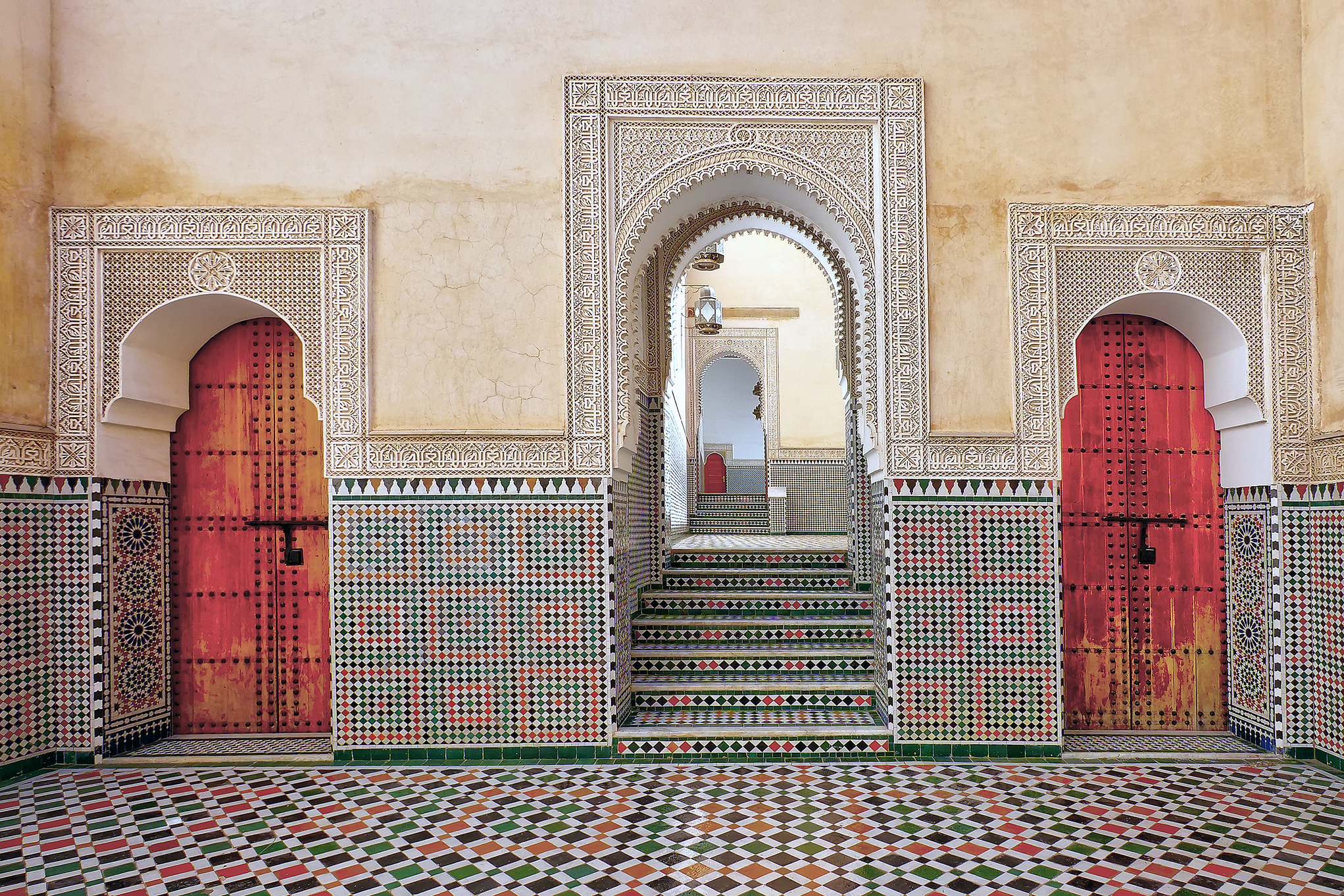
Hallway of the Moulay Ismail Mausoleum
The Moulay Ismail Mausoleum in Meknes
The Moulay Ismail Mausoleum in Meknes: A Door with Zellic tilework
The Moulay Ismail Mausoleum in Meknes : A cascade with Zellic floor design
The Moulay Ismail Mausoleum: A prayer niche
The Moulay Ismail Mausoleum : Ceiling in the inner sanctum
Up Up mahendra’s morocco
Up Up the north
Up Up rabat
Up Up the roman heritage
Up Up the southern beaches
Up Up the midwest
Up Up the central mountain ranges
Up Up the kasbah route

coming events:

  • calendar
  • public meditation

latest articles

  • dendera
  • karnak
  • luxor temple
  • medinet habu
  • valley of the kings
  • temple of hatshepsut
  • brihadaranyaka
  • aitireya
  • the north
  • rabat
  • the roman heritage
  • centers of islamic art
  • the southern beaches
  • the midwest
  • the central mountain ranges
  • the kasbah route

CATEGORIES

© Copyright - Planet of Love
  • imprint
  • privacy policy
Scroll to top Scroll to top Scroll to top